Losing 35kg, and how your skin and self-image adjust

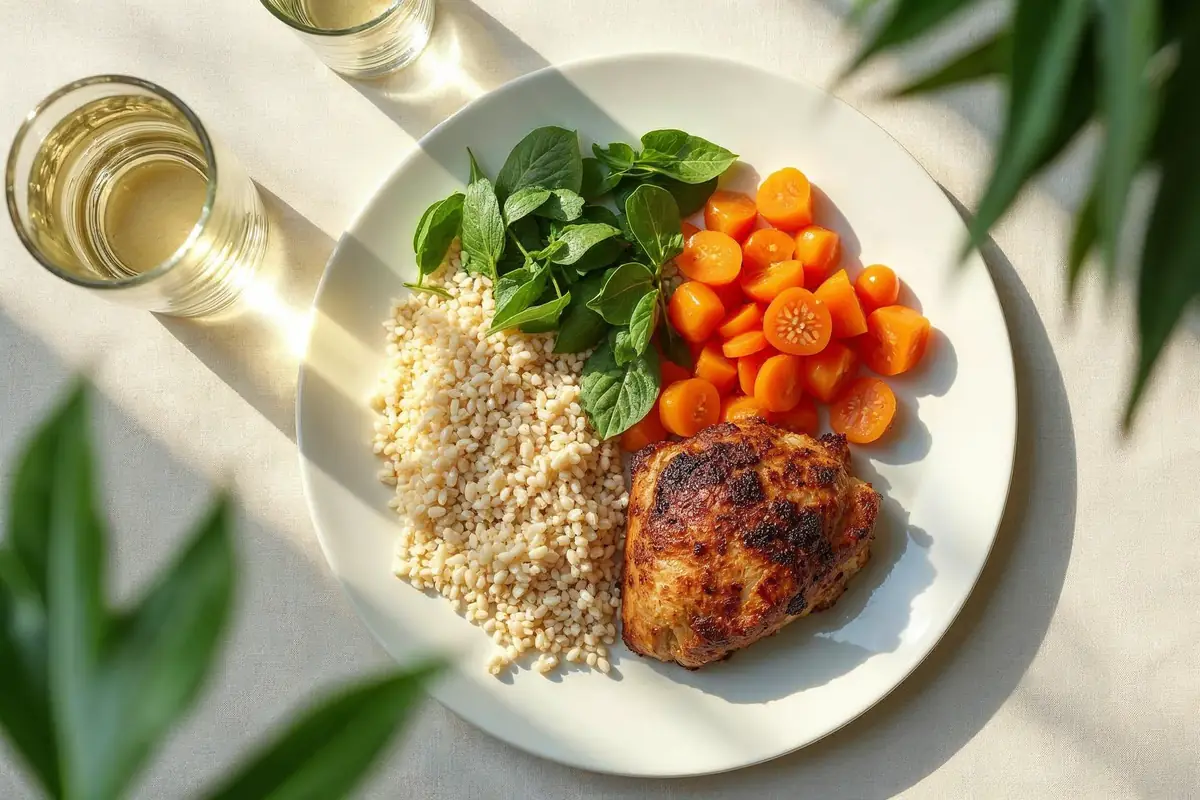
After losing 35kg, about 5 stone 7lb, your skin can stay loose and the way you see yourself may take time to catch up. This is common, and it is not a failure. A slow pace, keeping your muscle and patience all help. If surgery ever comes up, it is a conversation to have with your GP.
A club coach looks at your situation with you and gives you the best advice.
Book your free assessmentIn this article
A body that changes over a long time
A loss of 35kg transforms the body over many months. Your face becomes slimmer, your clothes change size several times, and so does the way you move. Rather than buying a whole wardrobe at each size, keep a few simple pieces and have them altered.
For any goal above 20kg, the journey is best made with your GP, who can check your health along the way. The NHS tips to help you lose weight suggest a pace of 0.5 to 1kg a week, about 1 to 2lb. Our article on lasting weight loss explains why this matters.
Why skin becomes loose
Skin has stretched over years. After a large weight loss, it does not always shrink back as much as the body does. The tummy, arms, inner thighs and chest are the areas most affected. Age, how long the extra weight was there, smoking and the speed of the weight loss all play a big part.
What helps your skin
- A slow pace. It gives your skin time to adapt.
- Muscle. It gives shape under the skin. Protein contributes to the maintenance of muscle mass, and our article on muscle and weight loss explains the rest.
- Enough protein. See our guide to how much protein you need per day.
- No smoking. It damages the skin and slows its repair.
No cream will remove a large amount of loose skin. When it really gets in the way, surgery can be discussed with your GP when your weight has been stable for several months. The NHS page on tummy tucks explains that this kind of surgery is rarely available on the NHS and is not a quick fix.
Self-image
The mirror changes faster than the way you see yourself. Many people still picture their old body months later. Others feel let down by the skin that remains. Talking helps, with someone close to you, your GP or a counsellor. You can also refer yourself to NHS talking therapies if low mood or worry sets in.
Write down what improves day to day. Easier breathing on the stairs, more energy, simple movements that feel lighter. 1 photo a month, taken in the same place, shows a journey the mirror does not see. This article does not replace advice from your GP or another health professional.
At the Witney club
Over a long journey, regular contact makes a difference. At our club in Witney, members come in for breakfast in the morning before work and the coaches check in with them every day. The free assessment is a good place to start talking about your goal.
Your weight loss curve
Enter your profile and the curve redraws straight away.
At the median pace, it would take about 11 weeks to lose 8 kg. At the gentlest pace, about 4 months.
The benchmark most often given for lasting weight loss is 500 g to 1 kg a week. That is the ideal zone of the chart. Above 1 kg a week on a regular basis, the body draws on its muscles as much as on its fat. That is the hatched zone.
An indicative projection. Every journey is personal and results vary from person to person. The calculation runs on your device, nothing is saved or sent. Over 65, talk to your doctor first.
How this curve is calculated
The top edge of the zone matches 500 g a week, the gentlest pace. The bottom edge matches 1 kg a week, the risk threshold.
The first weeks go faster, mostly water, then the pace slows. After 40, the median curve slows gradually, because metabolism slows. For the same effort, a man usually loses weight a little faster than a woman.
The journey curve adds plateaus of a few days and small regains, as in real life. It does not predict your own journey.
This advice is general. It does not replace medical advice.
Further reading

For day to day support, see the healthy eating programme.