Weight loss plateau, how to restart your weight loss

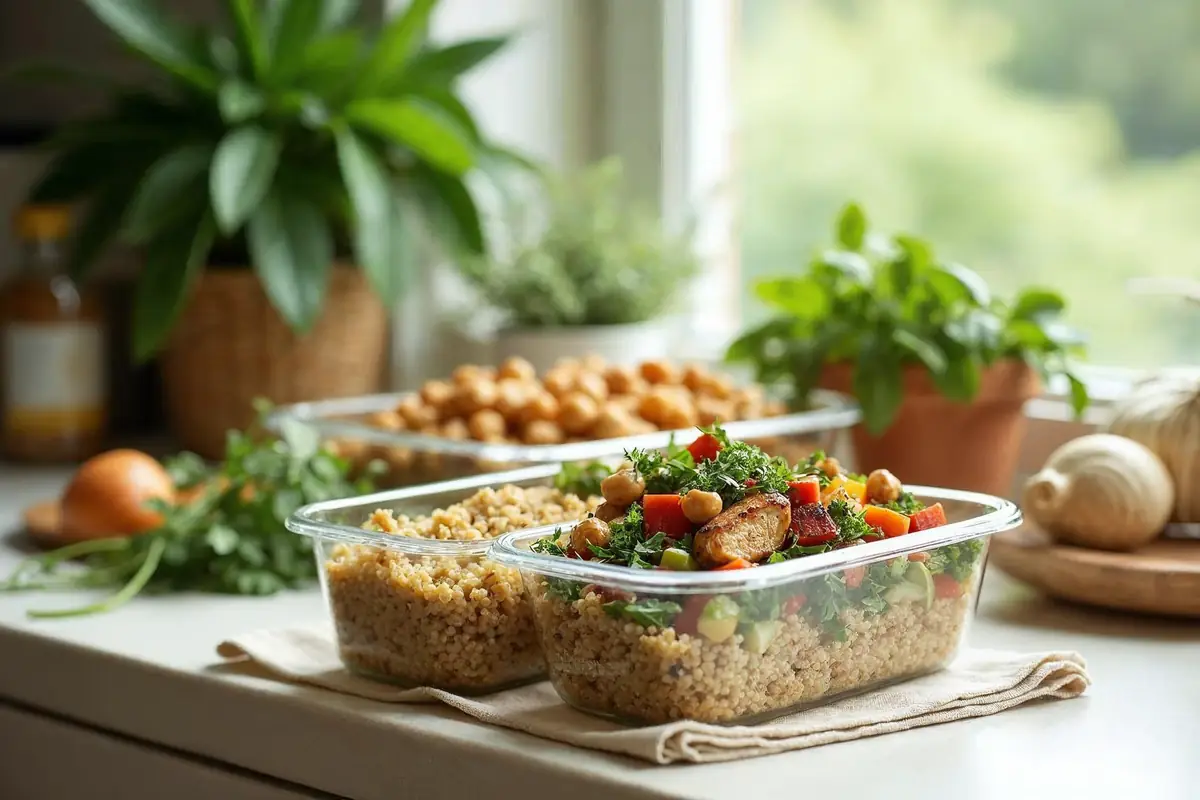
To break a weight loss plateau, change 1 thing at a time rather than eating less and less. Add protein, vary your meals and change the type of activity you do. A plateau is not a failure. It is a sign your body has adapted.
A club coach looks at your situation with you and gives you the best advice.
Book your free assessmentIn this article
Why weight loss stalls
Your body adapts. Lighter, it uses less energy, both moving and at rest. The gap that made the scales go down gets smaller until it disappears. This is mechanical, not a question of willpower.
2 other things play a part. The body can hold on to a little water while it uses its fat stores, which hides real progress for a while. And with the same menu every day, portions creep up without you noticing. Our article on metabolism and weight loss explains how the body adjusts.
Restart with your plate
Cutting portions even further is not the answer. Vary instead.
- Check your real portions. Weigh your food for 2 or 3 days to see where amounts have crept up. Cereal, pasta, cheese and oil are the usual suspects.
- Change your menus. Alternate fish, eggs, chicken and pulses to break the routine.
- Focus on protein. Protein contributes to the maintenance of muscle mass, and muscle uses energy at rest. Aim for a source at every meal, eggs in the morning, fish or chicken at lunch, lentils or beans in the evening.
- Keep meals complete. A filling meal avoids evening grazing, often the real cause of a plateau.
Your needs have also dropped with your weight. The NHS guide to calories gives 2,000kcal a day for an average woman and 2,500kcal for an average man, and a lighter body needs a little less. Our guide to how many calories to eat to lose weight helps you recalculate.
Vary activity rather than doing more
The body gets used to effort too. The same walking route ends up costing less energy. Add 2 short strength sessions a week, a few squats, press-ups against a wall, a plank. The NHS physical activity guidelines for adults recommend strength activities on at least 2 days a week. A faster walk or a hillier route also raises your energy use without any equipment.
How long a plateau lasts
A plateau often lasts a few weeks. The classic mistake is to cut everything harder, which costs muscle and makes the regain more likely afterwards. Keep your habits, change 1 thing, and judge it over 3 or 4 weeks with a tape measure as well as the scales.
If your weight has not moved for several months despite changes, or if you feel unusually tired, talk to your GP. This article does not replace advice from your GP or another health professional.
At the Witney club
A plateau is easier to get through with someone who checks in every day. At our club, the coaches trained in nutrition support members daily, and the free assessment helps spot what has crept back. Our article on avoiding yo-yo dieting is also worth reading.
Your weight loss curve
Enter your profile and the curve redraws straight away.
At the median pace, it would take about 11 weeks to lose 8 kg. At the gentlest pace, about 4 months.
The benchmark most often given for lasting weight loss is 500 g to 1 kg a week. That is the ideal zone of the chart. Above 1 kg a week on a regular basis, the body draws on its muscles as much as on its fat. That is the hatched zone.
An indicative projection. Every journey is personal and results vary from person to person. The calculation runs on your device, nothing is saved or sent. Over 65, talk to your doctor first.
How this curve is calculated
The top edge of the zone matches 500 g a week, the gentlest pace. The bottom edge matches 1 kg a week, the risk threshold.
The first weeks go faster, mostly water, then the pace slows. After 40, the median curve slows gradually, because metabolism slows. For the same effort, a man usually loses weight a little faster than a woman.
The journey curve adds plateaus of a few days and small regains, as in real life. It does not predict your own journey.
This advice is general. It does not replace medical advice.
Further reading


For day to day support, see the healthy eating programme.