Starchy foods for weight loss. Which to choose and how much to eat

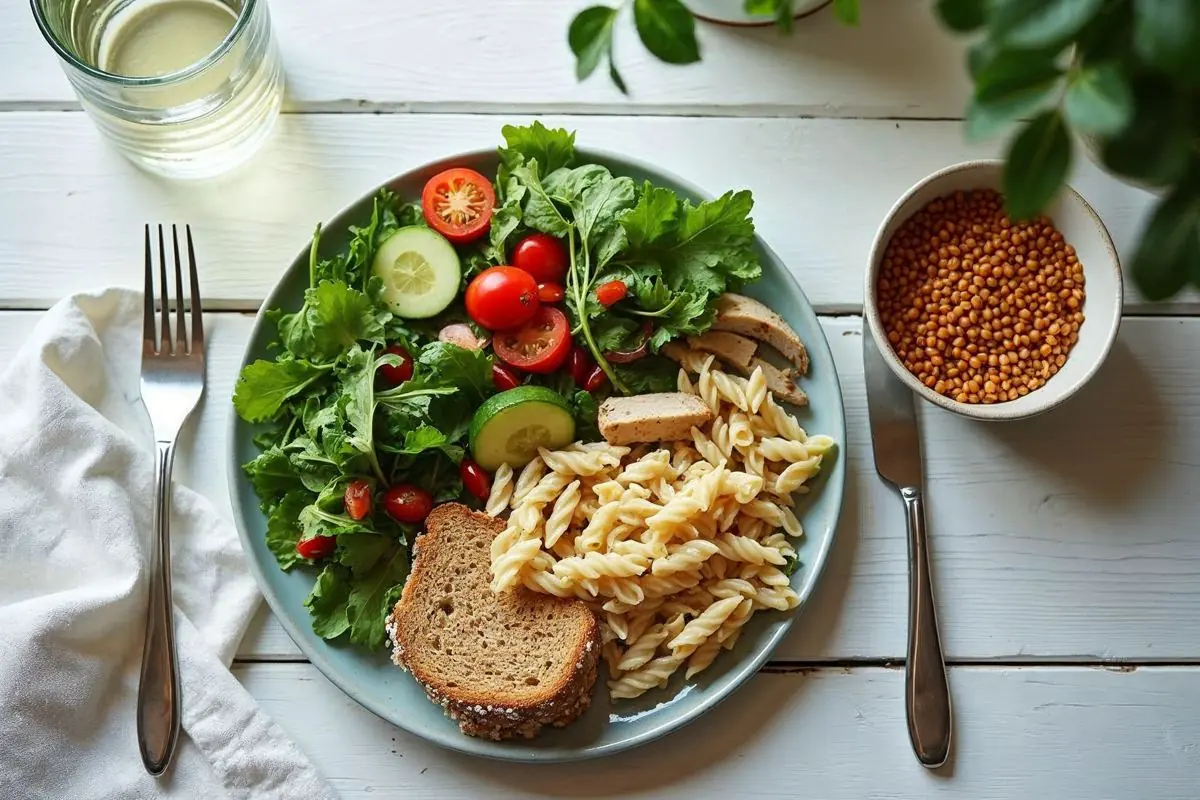
Starchy foods do not make you gain weight on their own. Keep them at each meal in a fist-sized portion, choose wholegrain versions and go easy on the butter, cheese and creamy sauces that come with them.
A club coach looks at your situation with you and gives you the best advice.
Book your free assessmentIn this article
Do starchy foods make you gain weight?
No, not by themselves. The NHS page on starchy foods and carbohydrates explains that, gram for gram, starchy foods contain fewer than half the calories of fat. What adds up is what goes on top. A baked potato is light. The same potato with butter and grated cheese is a different meal.
The NHS Eatwell Guide says starchy foods should make up just over a third of what we eat. Potatoes, bread, rice, pasta, porridge oats, couscous. They are the base of the British plate, not the enemy.
Cutting them out, a false lead
A diet without starchy food brings a fast drop on the scales, much of it water. Hunger then comes back in the afternoon and the evening, often with a craving for sweet things. You also miss out on fibre, B vitamins and iron. The government advisory committee SACN recommends 30g of fibre a day for adults, in its report on carbohydrates and health. Most adults eat around 20g, and wholegrain starchy foods are an easy way to close the gap.
How much starchy food to lose weight?
- A fist-sized portion of cooked rice, pasta or potatoes per meal.
- 2 slices of wholemeal bread with a meal.
- 40g of porridge oats for breakfast, about 4 tablespoons.
Adjust to your appetite and your day. Someone who walks to work and gardens on Saturday needs a little more than someone who sits all day. A steady portion beats an empty plate followed by a midnight raid on the cupboard.
Which starchy foods to choose, and how to cook them
- Wholegrain first. Brown rice, wholewheat pasta, wholemeal or seeded bread, porridge oats.
- Keep potato skins on. Boiled new potatoes or a baked potato with its skin give more fibre than mash with butter.
- Pulses count too. Lentils, chickpeas and beans bring both starch and protein.
- Cook simply. Boil, bake or steam rather than fry. Swap creamy sauces for tomato-based ones.
For dinner ideas built on this portion, see our guide to what to eat in the evening. For the full picture of fibre, read fibre and weight loss.
At the club in Witney
Witney Nutrition Club is also open on Saturday from 7am to 11am. Your first assessment is free, and a coach can help you find the starchy portion that suits your day.
This article does not replace advice from your GP or another health professional.
Your weight loss curve
Enter your profile and the curve redraws straight away.
At the median pace, it would take about 11 weeks to lose 8 kg. At the gentlest pace, about 4 months.
The benchmark most often given for lasting weight loss is 500 g to 1 kg a week. That is the ideal zone of the chart. Above 1 kg a week on a regular basis, the body draws on its muscles as much as on its fat. That is the hatched zone.
An indicative projection. Every journey is personal and results vary from person to person. The calculation runs on your device, nothing is saved or sent. Over 65, talk to your doctor first.
How this curve is calculated
The top edge of the zone matches 500 g a week, the gentlest pace. The bottom edge matches 1 kg a week, the risk threshold.
The first weeks go faster, mostly water, then the pace slows. After 40, the median curve slows gradually, because metabolism slows. For the same effort, a man usually loses weight a little faster than a woman.
The journey curve adds plateaus of a few days and small regains, as in real life. It does not predict your own journey.
This advice is general. It does not replace medical advice.
Further reading
For day to day support, see the healthy eating programme.